NATIONAL BANK OF ETHIOPIA

Monetary Policy Committee Meeting No. 6

The Monetary Policy Committee (MPC) of the National Bank of Ethiopia held its second meeting on March 21, 2026. In line with its roles and responsibilities set out in the NBE Establishment Proclamation, the MPC proposes monetary policies for adoption by the NBE Board and consistent with the central bank’s primary objective of maintaining price stability while supporting growth.
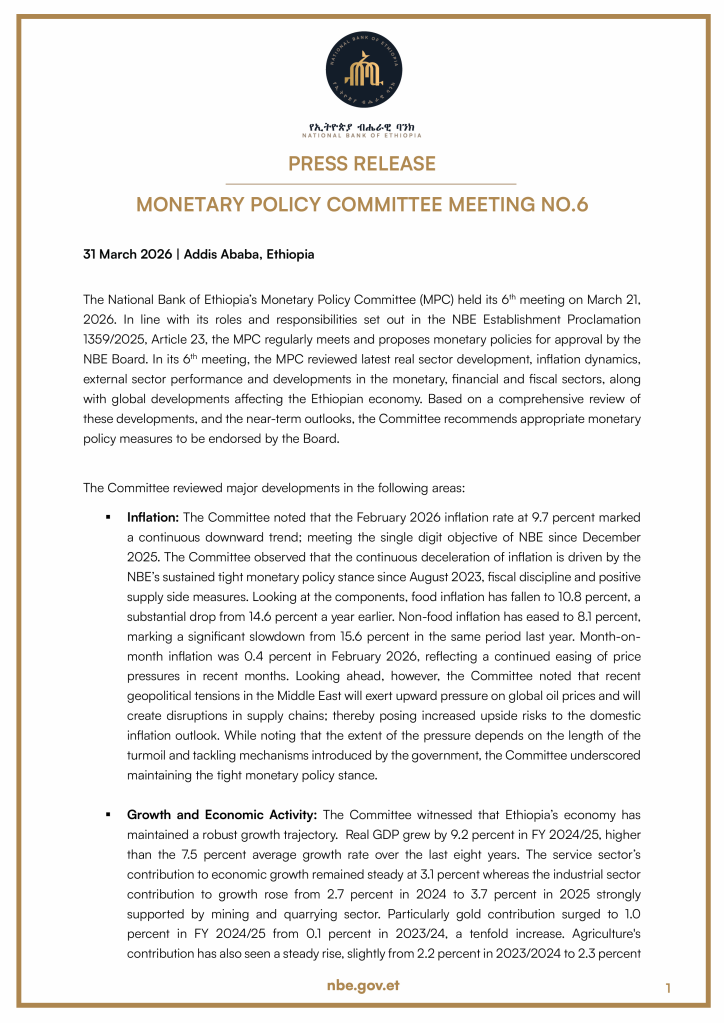
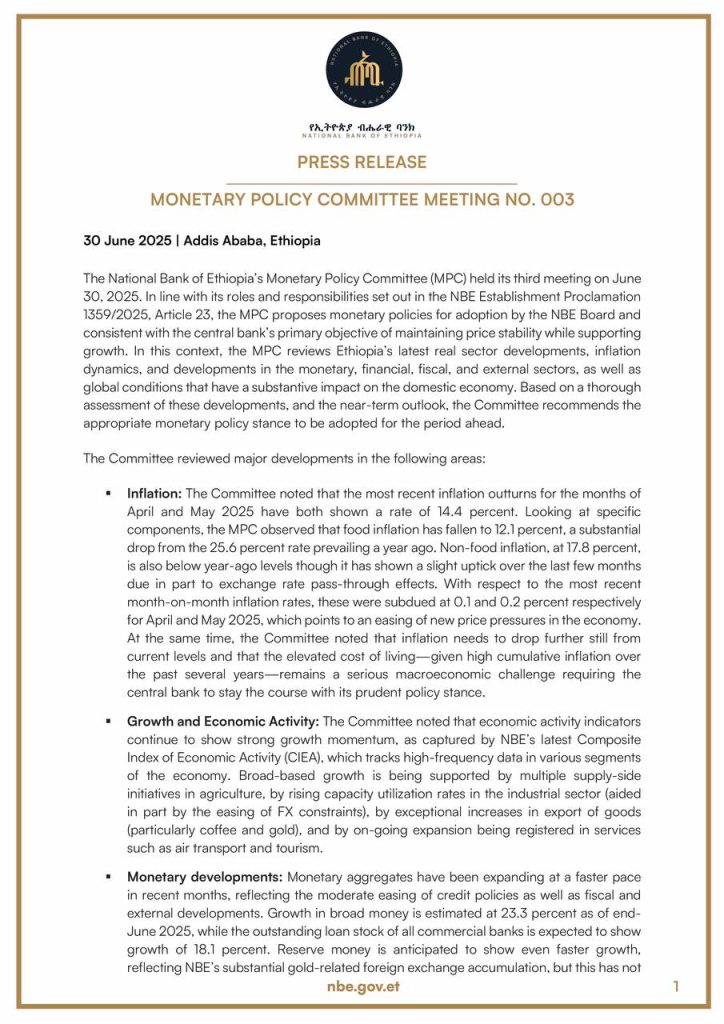
31 March 2026 | Addis Ababa, Ethiopia

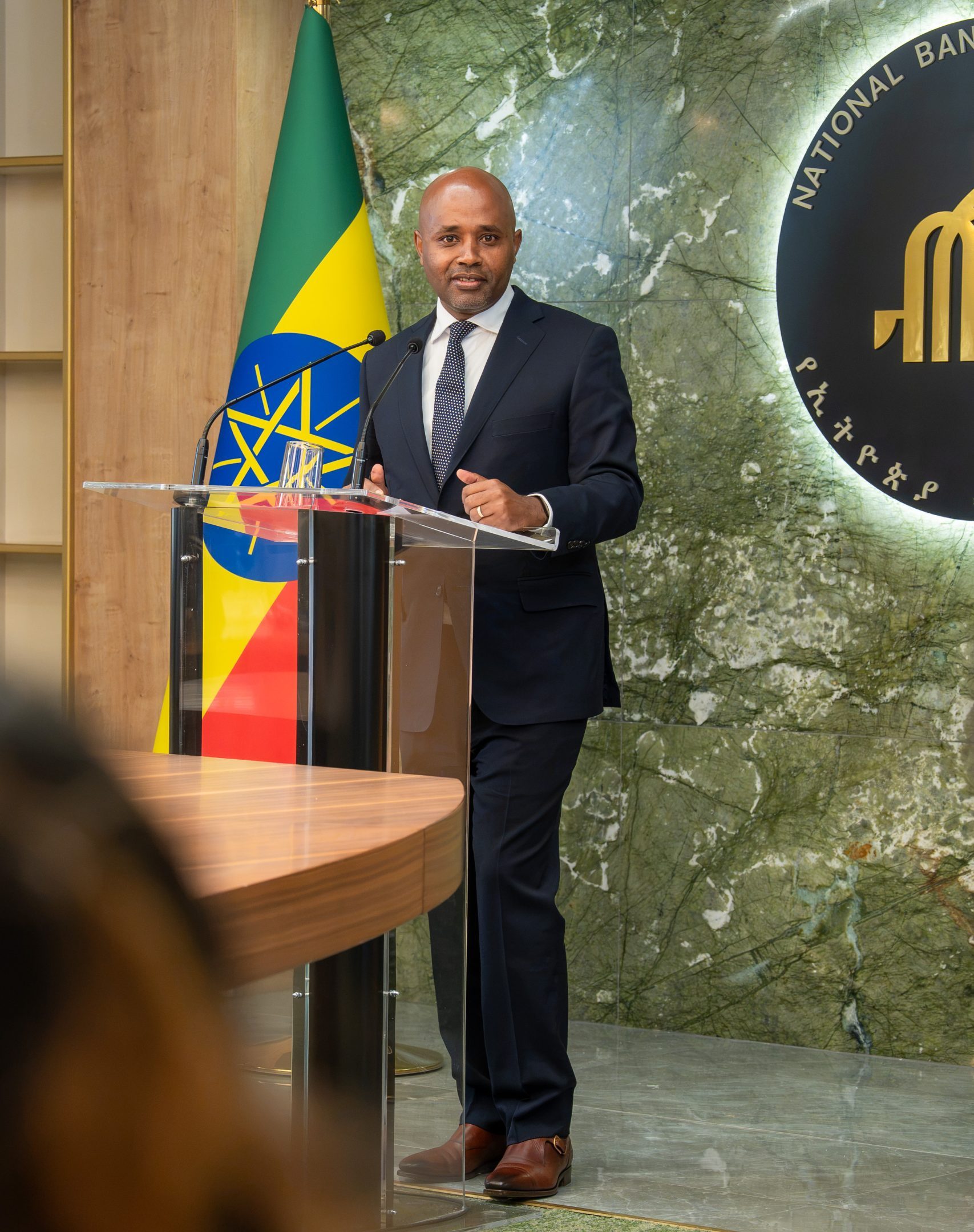
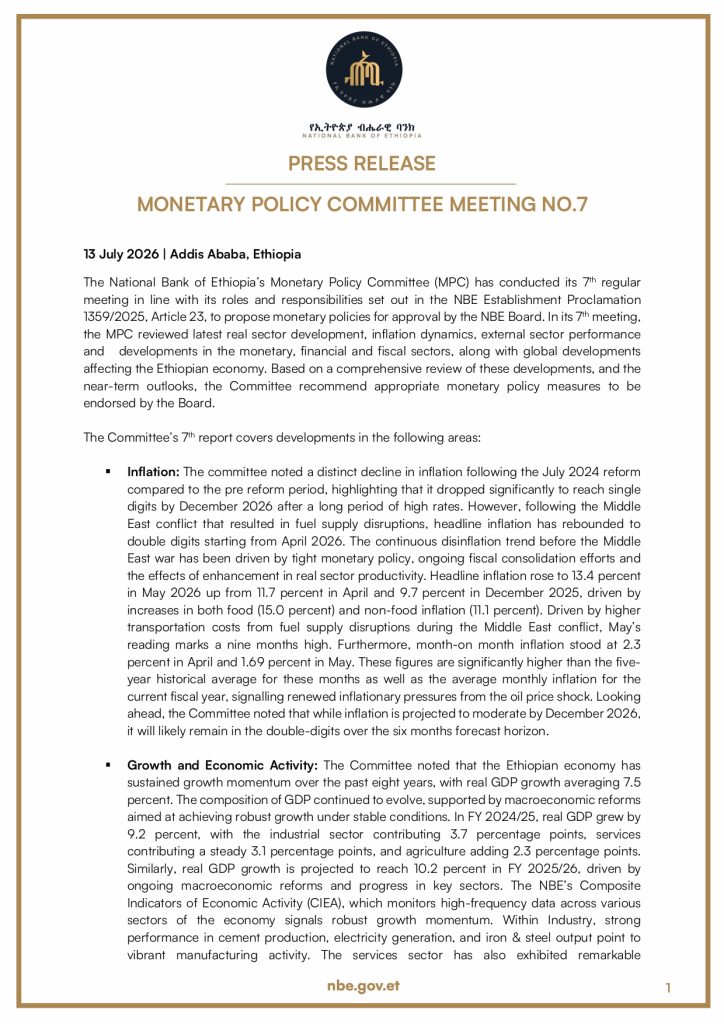
The National Bank of Ethiopia’s Monetary Policy Committee (MPC) held its 6th meeting on March 21, 2026. In line with its roles and responsibilities set out in the NBE Establishment Proclamation 1359/2025, Article 23, the MPC regularly meets and proposes monetary policies for approval by the NBE Board. In its 6th meeting, the MPC reviewed latest real sector development, inflation dynamics, external sector performance and developments in the monetary, financial and fiscal sectors, along with global developments affecting the Ethiopian economy. Based on a comprehensive review of these developments, and the near-term outlooks, the Committee recommends appropriate monetary policy measures to be endorsed by the Board.

The Committee reviewed major developments in the following areas:

  • Inflation: The Committee noted that the February 2026 inflation rate at 9.7 percent marked a continuous downward trend; meeting the single digit objective of NBE since December 2025. The Committee observed that the continuous deceleration of inflation is driven by the NBE’s sustained tight monetary policy stance since August 2023, fiscal discipline and positive supply side measures. Looking at the components, food inflation has fallen to 10.8 percent, a substantial drop from 14.6 percent a year earlier. Non-food inflation has eased to 8.1 percent, marking a significant slowdown from 15.6 percent in the same period last year. Month-on-month inflation was 0.4 percent in February 2026, reflecting a continued easing of price pressures in recent months. Looking ahead, however, the Committee noted that recent geopolitical tensions in the Middle East will exert upward pressure on global oil prices and will create disruptions in supply chains; thereby posing increased upside risks to the domestic inflation outlook. While noting that the extent of the pressure depends on the length of the turmoil and tackling mechanisms introduced by the government, the Committee underscored maintaining the tight monetary policy stance.


  • Growth and Economic Activity: The Committee witnessed that Ethiopia’s economy has maintained a robust growth trajectory.  Real GDP grew by 9.2 percent in FY 2024/25, higher than the 7.5 percent average growth rate over the last eight years. The service sector’s contribution to economic growth remained steady at 3.1 percent whereas the industrial sector contribution to growth rose from 2.7 percent in 2024 to 3.7 percent in 2025 strongly supported by mining and quarrying sector. Particularly gold contribution surged to 1.0 percent in FY 2024/25 from 0.1 percent in 2023/24, a tenfold increase. Agriculture’s contribution has also seen a steady rise, slightly from 2.2 percent in 2023/2024 to 2.3 percent in 2024/25. The NBE’s Composite Indicators of Economic Activity (CIEA), which monitors high-frequency data across various sectors of the economy signals robust growth momentum in FY 2025/26. Accordingly, the growth is anticipated to be driven by macroeconomic reforms and progress in key economic sectors. In the manufacturing sector, developments in cement production, electricity generation, and iron & steel output among others indicated a vibrant overall industrial sector activity. The services sector has also exhibited remarkable performance, with key indicators swinging upward. Especially tourist inflows and air transport activities (both passenger and freight) demonstrated significant growth over the period. However, declines were observed in some areas including export volume (Coffee and oilseed) and import of raw materials compared to the same period last fiscal year.


  • Monetary Developments: Monetary aggregates: broad money has been expanding further on y-o-y basis while there is a slower growth in base money. As of February 2026, y-o-y growth in broad money and base money stood at 39.3 percent and 43.2 percent, respectively. Compared with their June 2025 balances, broad money and base money increased by 22.7 percent and 23.0 percent, respectively. Growth in outstanding credit of banks reached 45.3 percent (y-o-y) by end February 2026 while it has expanded by 33.3 percent compared to June 2025 balance. The rapid y-o-y growth in broad money has been largely driven by credit expansion whereas moderate y-o-y growth in base money has been due to a significant sterilization through FX auctions.


  • Interest Rate Developments: The Committee noted that short term market interest rates have exhibited significant development and remained positive in real terms. In the Treasury Bills market, the 91-day T-bill weighted average yield declined to 12.4 percent in February 2026 from 15.2 percent in February 2025, owing to huge participation from private investors (through investment banks) in addition to increased participation from banks and non-bank institutions. On the other hand, the 7-day interbank weighted average rate rose to 17.9 percent in February 2026 from about 16.5 percent in February 2025, reflecting liquidity pressure in some private banks. The cumulative traded volume in local currency inter-bank money market has grown steadily, reaching Birr 1.97 trillion since the operation started in late October 2024.


  • Banking and Financial Sector: The banking sector remained safe and sound, with low NPLs and adequate capital. However, some segments of the banking sector continue to face liquidity challenges, given their high loan-to-deposit ratios. However, the introduction of an inter-bank money market and a Standing Lending Facility at the NBE has significantly helped to alleviate the short-term liquidity challenges faced by these banks.


  • Fiscal Sector: Fiscal policy in the review period appeared to be prudent, and more disciplined; aligned with the NBE’s tight monetary policy stance and the overall macroeconomic reform. Since the reform in July 2024, the government continued to refrain from taking direct advance from the NBE which has significantly contributed to lower base money growth. During the first seven months of FY 2025/26, the overall budget deficit to GDP ratio stood at 1.1 percent, up from 0.7 percent last year same period, despite a 65 percent y-o-y increase in revenue mobilization, as total expenditure grew by 48 percent over the same period. The T-bill market has played a key role to finance the deficit amounting to net Birr 136.6 billion during the first seven months of FY 2025/26.
  • External Sector: Following the comprehensive reform in July 2024, Ethiopia’s balance of payments registered a surplus, signalling resilience in external accounts. Likewise, during the first eight months of FY 2025/26, Ethiopia’s balance of payments recorded surplus marked by significant improvements in exports; particularly coffee and gold, private transfers, net service trade and increases in capital account. These developments underscore the impact of ongoing economic reforms aimed at improving external competitiveness to strengthen foreign exchange earnings and enhancing the overall sustainability of the external sector.
  • Global Environment: According to IMF’s January 2026 outlook, global growth was projected at around 3.3 percent in 2026 and 3.2 percent in 2027. However, this outlook is now subject to heightened downside risks following the recent oil price shock associated with escalating Middle East tensions. The sharp rise in energy prices is expected to dampen global growth by raising production costs, eroding real incomes, and tightening financial conditions, particularly in oil-importing economies. As a result, while the baseline projections remain broadly intact, the balance of risks has shifted to the downside, with the magnitude of the impact depending critically on the duration and intensity of the conflict and the persistence of elevated oil prices.


MPC Assessment and Recommendations


The Committee noted that, to sustain the single-digit inflation since December 2025, a continued tight monetary policy stance remains necessary. In this regard, the Committee underscored that the NBE should employ all available instruments, individually or in combination. Consequently, the Committee reaffirmed its commitment to maintain a tight monetary policy stance to achieve the price stability objective.

Accordingly, the Committee decided to maintain the NBE policy rate and annual credit growth caps at their current levels. However, in light of heightened global economic uncertainty, driven by the conflict in the Middle East and its potential impact on the domestic economy, the Committee emphasized the necessity of more frequent reviews of key macroeconomic developments. The Committee agreed to reconvene by late April, or earlier if warranted, to evaluate whether additional policy measures are required.


Monetary Policy Committee

National Bank of Ethiopia

31 March 2026

NATIONAL BANK OF ETHIOPIA

Monetary Policy Committee Meeting No. 2

The Monetary Policy Committee (MPC) of the National Bank of Ethiopia held its second meeting on March 25, 2025. In line with its roles and responsibilities set out in the NBE Establishment Proclamation, the MPC proposes monetary policies for adoption by the NBE Board and consistent with the central bank’s primary objective of maintaining price stability while supporting growth.

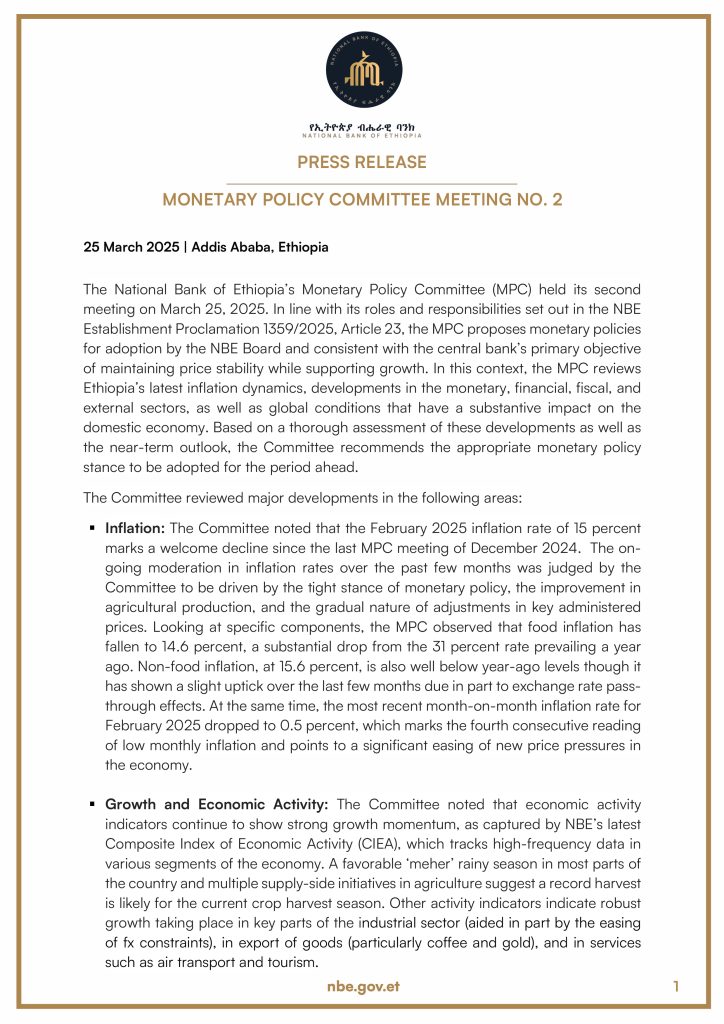
25 March 2025 | Addis Ababa, Ethiopia

The National Bank of Ethiopia’s Monetary Policy Committee (MPC) held its second meeting on March 25, 2025. In line with its roles and responsibilities set out in the NBE Establishment Proclamation 1359/2025, Article 23, the MPC proposes monetary policies for adoption by the NBE Board and consistent with the central bank’s primary objective of maintaining price stability while supporting growth. In this context, the MPC reviews Ethiopia’s latest inflation dynamics, developments in the monetary, financial, fiscal, and external sectors, as well as global conditions that have a substantive impact on the domestic economy. Based on a thorough assessment of these developments as well as the near-term outlook, the Committee recommends the appropriate monetary policy stance to be adopted for the period ahead.

The Committee reviewed major developments in the following areas:

  • Inflation: The Committee noted that the February 2025 inflation rate of 15 percent marks a welcome decline since the last MPC meeting of December 2024. The on-going moderation in inflation rates over the past few months was judged by the Committee to be driven by the tight stance of monetary policy, the improvement in agricultural production, and the gradual nature of adjustments in key administered prices. Looking at specific components, the MPC observed that food inflation has fallen to 14.6 percent, a substantial drop from the 31 percent rate prevailing a year ago. Non-food inflation, at 15.6 percent, is also well below year-ago levels though it has shown a slight uptick over the last few months due in part to exchange rate pass-through effects. At the same time, the most recent month-on-month inflation rate for February 2025 dropped to 0.5 percent, which marks the fourth consecutive reading of low monthly inflation and points to a significant easing of new price pressures in the economy.
  • Growth and Economic Activity: The Committee noted that economic activity indicators continue to show strong growth momentum, as captured by NBE’s latest Composite Index of Economic Activity (CIEA), which tracks high-frequency data in various segments of the economy. A favorable ‘meher’ rainy season in most parts of the country and multiple supply-side initiatives in agriculture suggest a record harvest is likely for the current crop harvest season. Other activity indicators indicate robust growth taking place in key parts of the industrial sector (aided in part by the easing of fx constraints), in export of goods (particularly coffee and gold), and in services such as air transport and tourism.
  • Monetary developments: Monetary aggregates have been expanding at a faster pace since the last meeting of the MPC, reflecting the moderate easing of credit policies as well as fiscal and external developments. Growth in broad money and base money stood at 22.8 percent and 42.0 percent, respectively, as of January 2025, while growth in domestic credit remains relatively unchanged at 19.8 percent. The much faster growth rate of reserve money reflects NBE’s recent gold-related foreign exchange accumulation and the corresponding injection of local currency liquidity into the banking system.
  • Interest rate developments: The Committee noted that short-term market interest rates have for the first time turned positive in real terms. In the Treasury Bills market, the weighted average yield on 364-day T-bills rose to 17.7 percent in February 2025, from 15.9 percent at end-December 2024. In the inter-bank money market, where banks lend to and borrow from each other, the weighted average rate as of February 2025 stood at 16.7 percent, which was well within the NBE’s interest rate corridor of 15 percent plus-or-minus three percent. Transaction volumes in the inter-bank money market continue to grow steadily and stood at Birr 338.8 billion as of end-February 2025.
  • Banking and Financial Sector: The banking sector remained safe and sound, with low NPLs and adequate capital. However, some segments of the banking sector continue to face liquidity challenges, given their high loan-to-deposit ratios. The introduction of an inter-bank money market and a Standing Lending Facility at the NBE has been helping to alleviate the short-term liquidity challenges faced by some banks.
  • Fiscal position: The fiscal policy stance continued to be prudent. Strict fiscal discipline has allowed for zero monetary financing of the deficit so far in the fiscal year and been highly supportive of the central bank’s monetary policy stance.
  • External sector: The Committee recognized the major improvements taking place in the external sector, as revealed by continued strong growth in export of goods and services, increased remittances, as well as higher capital account inflows linked to the exchange rate reforms of July 2024. These developments have resulted in a current account surplus for the first half of the fiscal year and substantially boosted FX reserve levels.
  • Global environment: Per the IMF’s January 2025 projections, global growth is expected to remain steady at 3.3 percent both in 2025 and 2026, while global inflation is forecast to decline gradually from 4.2 percent in 2025 and to 3.5 percent in 2026. However, reflecting recent geo-political developments, uncertainties have subsequently arisen on the outlook for global tariffs and trade flows, which may adversely affect inflationary developments. Trends in global commodity prices remain broadly favorable for the Ethiopian economy, as oil prices have declined by 9.0 percent since the start of the fiscal year while prices for Ethiopia’s largest exports (coffee and gold) remain at or close to record highs, contributing to a strong balance of payments improvement.

MPC Assessment and Decision

While the on-going progress in reducing inflation is encouraging, the Committee noted that the inflation rate remains above the intended target of reaching single-digit inflation over the medium term. Accordingly, the Committee agreed that a disinflationary monetary policy stance remains appropriate and should remain in place until there is still further progress in reducing inflation.  The Committee also noted that the management of recent foreign exchange inflows required close attention and a cautious approach to ensure that the associated monetary injections do not create an unintended loosening of the monetary policy stance. In light of these considerations, the Committee judged that the current prudent stance of monetary policy should be maintained. 

Consistent with this view, the MPC recommended and the NBE Board approved the following monetary policy actions:

  • First, the MPC agreed to leave the current 15 percent National Bank Rate (NBR) unchanged, given the need to reduce the still elevated inflation rate and the importance of anchoring exchange rate expectations.
  • Second, as the move to an interest rate-based monetary policy regime remains in a transitional phase, the MPC recommended keeping unchanged the prevailing 18 percent cap on annual credit growth.
  • Third, the Committee decided to keep existing rates applicable for NBE’s Standing Deposit Facility, Standing Lending Facility and reserve requirements on bank deposits.

The Committee noted that its future monetary policy decisions will be heavily dependent on inflation outturns and broader economic developments over the coming months. The Committee decided that its next meeting shall take place at the end of June 2025.

NATIONAL BANK OF ETHIOPIA

Monetary Policy Committee Meeting 002

The Committee decided that its next meeting shall take place on March 25, 2025.

The Committee decided that its next meeting shall take place on March 25, 2025.

NATIONAL BANK OF ETHIOPIA

Monetary Policy Committee Inaugural Meeting

The Monetary Policy Committee (MPC) of the National Bank of Ethiopia held its inaugural meeting on December 31, 2024. In line with its roles and responsibilities set out in the NBE Establishment Proclamation, the MPC proposes monetary policies for adoption by the NBE Board and consistent with the central bank’s primary objective of maintaining price stability while supporting growth.

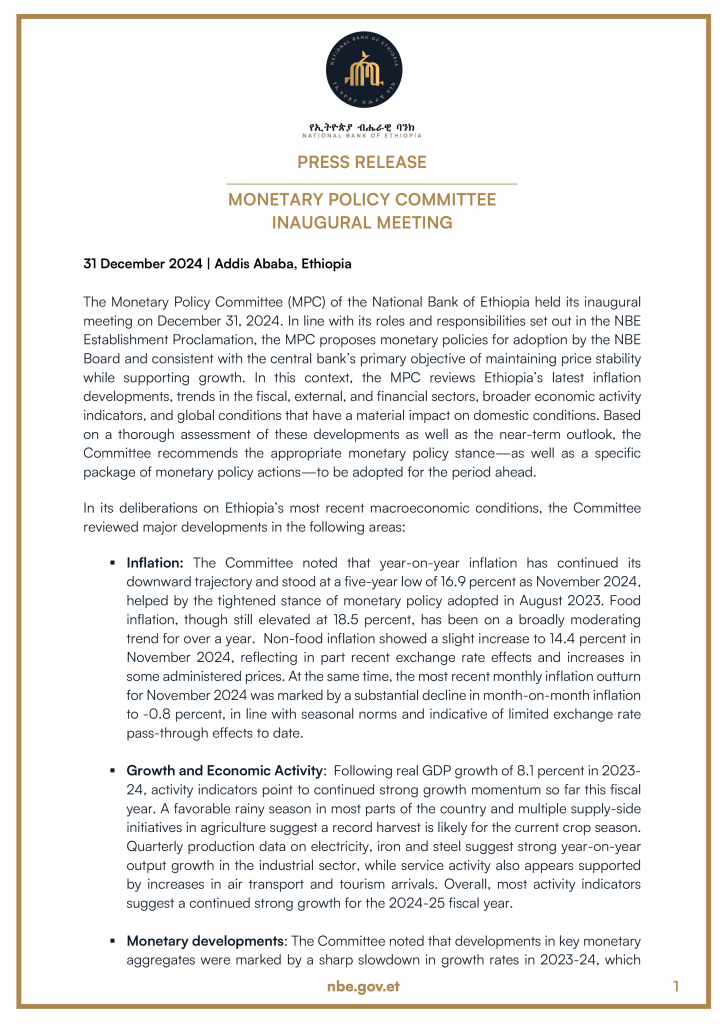
31 December 2024 | Addis Ababa, Ethiopia

The Monetary Policy Committee (MPC) of the National Bank of Ethiopia held its inaugural meeting on December 31, 2024. In line with its roles and responsibilities set out in the NBE Establishment Proclamation, the MPC proposes monetary policies for adoption by the NBE Board and consistent with the central bank’s primary objective of maintaining price stability while supporting growth. In this context, the MPC reviews Ethiopia’s latest inflation developments, trends in the fiscal, external, and financial sectors, broader economic activity indicators, and global conditions that have a material impact on domestic conditions. Based on a thorough assessment of these developments as well as the near-term outlook, the Committee recommends the appropriate monetary policy stance—as well as a specific package of monetary policy actions—to be adopted for the period ahead.

In its deliberations on Ethiopia’s most recent macroeconomic conditions, the Committee reviewed major developments in the following areas:

Inflation: The Committee noted that year-on-year inflation has continued its downward trajectory and stood at a five-year low of 16.9 percent as November 2024, helped by the tightened stance of monetary policy adopted in August 2023. Food inflation, though still elevated at 18.5 percent, has been on a broadly moderating trend for over a year. Non-food inflation showed a slight increase to 14.4 percent in November 2024, reflecting in part recent exchange rate effects and increases in some administered prices. At the same time, the most recent monthly inflation outturn for November 2024 was marked by a substantial decline in month-on-month inflation to -0.8 percent, in line with seasonal norms and indicative of limited exchange rate pass-through effects to date.

Growth and Economic Activity: Following real GDP growth of 8.1 percent in 2023-24, activity indicators point to continued strong growth momentum so far this fiscal year. A favorable rainy season in most parts of the country and multiple supply-side initiatives in agriculture suggest a record harvest is likely for the current crop season. Quarterly production data on electricity, iron and steel suggest strong year-on-year output growth in the industrial sector, while service activity also appears supported by increases in air transport and tourism arrivals. Overall, most activity indicators suggest a continued strong growth for the 2024-25 fiscal year.

Monetary developments: The Committee noted that developments in key monetary aggregates were marked by a sharp slowdown in growth rates in 2023-24, which helped reduce inflationary pressures and expectations last year. At the same time, somewhat higher growth rates have been observed for all key monetary aggregates since the start of the current fiscal year: growth in broad money and base money stood at 20 percent and 17 percent, respectively, as of November 2024, while growth in domestic credit was similarly strong at 19 percent on a year-on-year basis. However, despite the recent pick-up in monetary growth rates, the Committee noted that there has been a sharp reduction in key monetary aggregates relative to the size of the economy—with growth rates of broad money, base money, and domestic credit all well below growth in nominal GDP—and that a gradual reversal of this real decline would be welcome to support growth over the medium-term.

Banking and Financial Sector: The banking system was assessed to be safe and sound, with low NPLs, high provisions, and adequate capital. At the same time, significant liquidity strains were noted in some segments of the banking system, which was reflected in high loan-to-deposit ratios and a low ratio of excess reserves to deposits for the private banking system. These liquidity challenges are being mitigated somewhat by the recent availability of both an inter-bank money market and a Standing Lending Facility at the NBE.

Fiscal position: Budgetary developments have been broadly favorable given on-going fiscal consolidation. This has allowed for zero monetary financing of the deficit so far in the fiscal year and thus been highly supportive of the central bank’s monetary policy stance.

External sector: Helped by the exchange rate reform of July 2024, the external position is showing significant improvement, including strong growth in exports and remittances, modest import compression, and substantial capital inflows from private and official sources. These developments have generated a current account surplus in the first quarter of the fiscal year and also boosted FX reserves to record highs at both commercial banks and at the NBE.

Global environment: Commodity price developments—which are the primary channel through which the global economy affects domestic conditions—have been broadly favorable. Global oil prices have declined by 15 percent since the start of the fiscal year while prices for Ethiopia’s largest exports (coffee and gold) have risen to record highs, contributing to a strong balance of payments improvement. While some parts of the global economy (including in Ethiopia’s major trading partners) have experienced a growth slowdown, this has not yet had a material impact on exports or FDI. At the same time, some of the more positive turns in the world economy—such as the easing of monetary policies in advanced economies and the strengthening recovery in some economies—have had relatively limited impacts to date, reflecting Ethiopia’s still low level of trade and financial integration with the outside world.

MPC Assessment and Decision

The MPC noted that while recent inflation outturns have been encouraging and show a generally disinflationary direction, it nonetheless remains important to maintain a prudent monetary stance. In particular, the Committee noted that the inflation rate remains elevated and is well above the intended target of reaching single-digit inflation over the medium term. In addition, in the Committee’s view, two aspects of the macroeconomic outlook call for a cautious monetary stance: the expected easing of fiscal conditions over the coming months (given the normal budgetary execution cycle as well as increases in salaries, social spending, and safety nets) and the moderately expansionary impulse likely from increased net foreign exchange inflows. Set against these considerations, the Committee recognized the disinflationary trend in the latest monthly inflation data (-0.8 percent for November 2024), the unusually tight liquidity and credit conditions prevailing in the banking system, and the sharp real decline in monetary aggregates relative to nominal GDP. In balancing these considerations, the Committee judged that the current prudent stance of monetary policy should be maintained, albeit with modest modifications.

Consistent with this view, the MPC recommended and the NBE Board approved the following monetary policy actions:

First, the MPC decided to leave unchanged the current National Bank Policy Rate (NPR) of 15 percent, given the need to reduce the still elevated inflation rate and also the importance of anchoring exchange rate expectations.

Second, as the move to an interest-based monetary policy regime remains in a transitional phase, the MPC recommended the continued use of a credit growth target but with a moderate adjustment in the targeted credit growth rate from 14 percent to 18 percent.

Third, the Committee maintained unchanged the existing rates applicable for NBE’s Standing Deposit Facility, Standing Lending Facility, and reserve requirements on bank deposits.

The Committee noted that its future monetary policy decisions will be heavily dependent on inflation outturns over the coming months. The Committee decided that its next meeting shall take place on March 25, 2025.

NATIONAL BANK OF ETHIOPIA

The National Bank of Ethiopia Announces the Launch of a New Monetary Policy Framework

The National Bank of Ethiopia has taken a number of policy measures aimed at reducing inflation in a significant and sustained manner.

As part of its primary goal of ensuring low and stable inflation, the NBE has been working towards the modernization of Ethiopia’s monetary policy framework over the past year. Several preparatory measures have been taken, in line with the NBE Medium-term Strategy Plan, to establish a supportive legal, institutional, and technical basis for meeting this objective. Most notably, the NBE’s mandate has been clearly defined to prioritize price stability relative to other goals. In addition, NBE’s technical capacity has been enhanced so as to adopt monetary policy tools that are better in line with modern central bank practices and more consistent with an increasingly dynamic and market-based financial system.

With the above preparatory work now largely complete, the NBE is today announcing the following set of measures to fully implement its new monetary policy framework.

  • First, NBE is moving to an interest-rate based monetary policy regime. Under the new policy framework, NBE will use its policy interest rate—to be known as the National Bank Rate or NBR—as the primary means of signaling its policy stance and influencing broader monetary and credit conditions. The NBR will be raised or lowered depending on prevailing inflationary and monetary conditions.
  • Second, the NBE is setting its initial policy interest rate at 15 percent. This policy rate takes into account current macroeconomic conditions, which are characterized by gradually declining (but still elevated) inflation, low base money growth, and a marked slowdown of bank  credit growth over the past year. The policy rate is close to the rate at which banks currently lend to each other and is somewhat below commercial bank lending rates, which are in the range of 16-20 percent for most loan categories. The NBR is not meant to fix or set interest rates in the banking sector, which remain determined by the competitive interactions among banks and their clients. The minimum savings rate of 7 percent is not affected or currently being changed by the introduction of the NBE policy rate.
  • Third, the NBE will start conducting monetary policy related auctions every two weeks, whereby it will either withdraw or supply liquidity to the banking system depending on its assessment of the latest prevailing conditions.  These auctions, known formally as Open Market Operations, will be used as the primary monetary policy instrument to ensure that interest rates in the interbank market—the operating target of monetary policy—remain close to the NBR.  When excess liquidity in the banking system leads to significant downward deviations in the interbank market rate from the NBR, the OMO auctions will be used to withdraw excess liquidity from the banking system. Conversely, when the banking system as a whole is short of liquid funds resulting in significant upward deviations of the interbank market rate from the NBR, NBE will use OMO auctions to inject liquidity into the banking system. The first OMO auction is scheduled for July 11, 2024.
  • Fourth, NBE is also introducing an ‘Overnight Lending Facility’ and an ‘Overnight Deposit Facility’ for banks that might need to manage their liquidity positions over just a one-day time horizon. These facilities, known formally as Standing Facilities, will be offered at the NBR rate plus or minus 3 percent.
  • Fifth, NBE is soon introducing an electronic platform that will make it easier for banks to  lend to and borrow from each other, thereby facilitating an active and functional ‘interbank money market’. The money market, once fully operationalized via a web-based online platform, will allow liquidity-surplus banks to provide funds to liquidity-short banks on a continuous basis, thereby allowing shortage or surplus conditions at specific banks to be addressed within the banking system and without the need for central bank intervention. It is expected that interest rates in the interbank market will align with the NBR but, should this not be the case, the NBE will intervene using OMO auctions (as outlined earlier) to ensure that the interbank interest rate converges to the NBR. 
  • Sixth, as the shift to the new monetary policy framework is taking effect, the NBE will for a transitory period retain its past tools for managing liquidity. More specifically, quantitative measures for monetary management may be used as supplementary tools should the new monetary transmission mechanisms (whereby changes in the policy rate affect economy-wide credit conditions) turn out to be weaker or slower than initially expected. In addition, specific monetary policy instruments for addressing interest-free banking providers will be specified by the NBE in the near future.

Conclusion

The reforms being announced today represent a historic step in modernizing NBE’s monetary policy framework and aligning its policy tools with global best practices. The setting of a benchmark policy rate, the start of Open Market Operation auctions, the introduction of overnight facilities for banks, and the addition of a money market platform in the very near future are all important initiatives to support NBE in fulfilling the vital set responsibilities—most notably that of ensuring price stability—entrusted upon it per its own Strategy Plan and NBE Establishment Proclamation.  

NBE believes that today’s package of measures will address some long-standing weaknesses in Ethiopia’s macroeconomic and banking environments. For the mutual benefit of all involved, NBE urges the cooperation of all stakeholders to ensure a successful implementation of this new monetary policy package.